The last 30 days before NEET can be crucial in determining your success. With a proper revision strategy, you can maximize your score and boost your confidence. Here’s a step-by-step guide to revising effectively in the final month before NEET.
- Divide your syllabus into small, manageable sections.
- Allocate time for each subject based on your strengths and weaknesses.
- Ensure daily revision of key topics, formulas, and concepts.
- NCERT textbooks should be your primary focus, especially for Biology and Chemistry.
- Revise all diagrams, tables, and summary points given at the end of each chapter.
- Highlight important points to make quick revisions easier.
- Practice at least one full-length previous year paper every day.
- Identify recurring topics and frequently asked questions.
- Analyze your mistakes and focus on weak areas.
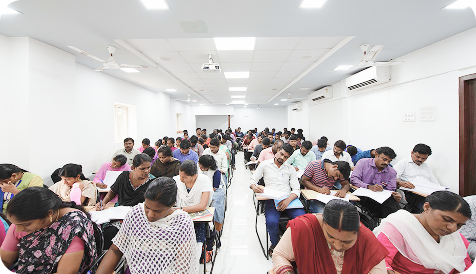
- Take full-length mock tests in a timed environment to simulate exam conditions.
- Aim for at least 10-15 mock tests in the last month.
- Evaluate your performance after every test and adjust your revision strategy accordingly.
- Maintain a separate notebook for formulas, short notes, and key points.
- Go through physics formulas daily and solve a few numerical problems.
- Memorize biological diagrams and reactions in Chemistry.
- Utilize flashcards for quick revision of difficult concepts.
- Create mnemonics to remember complex information efficiently.
- Engage in active recall techniques to reinforce learning.
- Identify your weak subjects or topics and give them extra attention.
- Revise difficult concepts multiple times using short notes and video lectures.
- Seek clarification for doubts from teachers or online resources.
- Get at least 6-7 hours of sleep daily to ensure proper brain function.
- Eat nutritious food and stay hydrated.
- Take short breaks during study sessions to avoid burnout.
- Do not start new topics in the last few weeks; focus on revising what you already know.
- Strengthen concepts you are confident in rather than attempting unfamiliar topics.
- Avoid stress and self-doubt; maintain a positive mindset.
- Engage in light physical activities or meditation to stay relaxed.
- Trust your preparation and give your best effort.
A minimum of 8-10 hours of focused study is recommended, including revision, mock tests, and practice sessions. However, quality of study matters more than the number of hours.
While it is beneficial to take full-length mock tests regularly, you should balance it with revision. Ideally, 3-4 mock tests per week, increasing in the final two weeks, will help in time management and accuracy.
Use active recall methods like writing down key points, discussing with friends, and using flashcards. Repeating concepts multiple times in short intervals will reinforce memory.
While Biology is crucial, do not neglect Physics and Chemistry. A balanced approach will help you achieve an overall high score. Prioritize weak areas but ensure all three subjects get adequate revision time.
If a topic is extremely difficult and less important in terms of weightage, you can spend minimal time on it. However, ensure that you master high-weightage topics and frequently asked questions.
The last 30 days before NEET should be focused on structured revision, regular practice, and maintaining a calm mindset. Follow these strategies to maximize your retention, boost confidence, and improve your overall performance on the exam day. Good luck!